
Top 5 challenges faced by Filipino farmers today

Updated: Sep 27, 2023

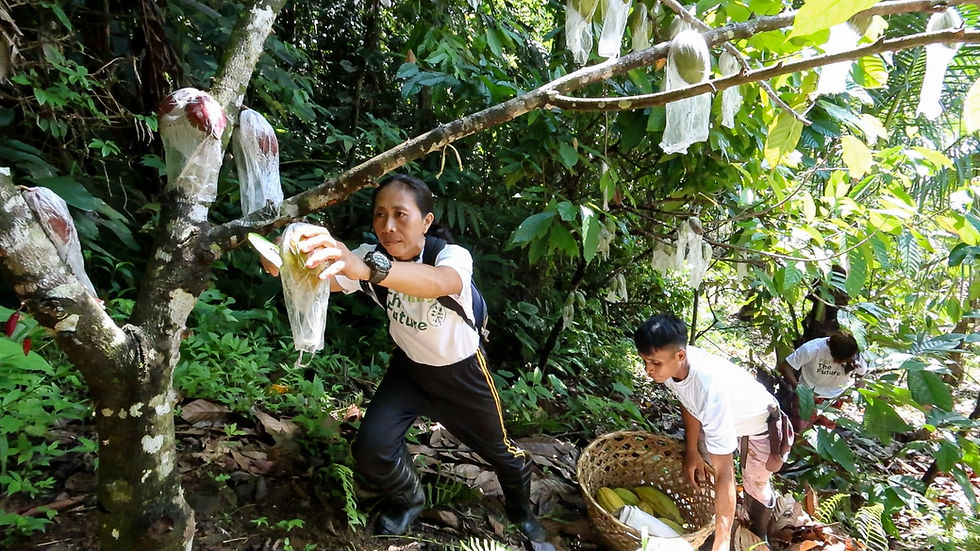
Photo credit: Mhea Arminal
According to the 2021 data released by Philippine Statistics Authority (PSA)[1], farmers and fisherfolks remain the poorest in the country, farmers with a poverty incidence of 30%, almost double the national poverty incidence of 18.1% according to the World Bank.[2] This is also more than three times the global poverty incidence of 8.8%,[3] as estimated by World Bank in 2021 (9.3%, 2020). Poverty is one issue, but income inequality is another. Farmers, who mostly belong to the bottom 50% earners in the country, only share 14% of the national income.[4] Many of these farmers are among the nearly 20 million Filipinos living in extreme poverty.
So, why are many Filipino farmers poor? Here are the five top challenges they faced today:
Capital
First, small-holder farmers don't have sufficient capital to afford high input costs such as fertilizers, pesticides, and other costs. As a result, they resort to microfinancing or, worse, money lenders that charge as high as 10-20% interest rate per month. This is due to many barriers in accessing formal credit institutions, such as physical access, high transaction costs, and the complexity of the process. In 2020, the banking system generated a total of $116.5 billion in loanable amounts, but banks were only able to loan 6% for the agriculture sector, which is only 10% compliance rate of the banks' credit quota as mandated by the Agri-Agra Reform Credit Act of 2009 (RA 10000).[5]
Postharvest Facility
The second challenge is the lack of, or limited, postharvest facilities. Without proper postharvest facilities, harvests are not processed or stored correctly, and farmers often must sell their produce at a reduced price to avoid spoilage, wastage, or contamination from pests and diseases. Improper handling or storage can also decrease the quality of the produce, resulting in significant income losses for the farmers. In the Philippines, postharvest losses among major farm commodities range from 10-50%.[6]

Photo credit: Mon Corpuz
Climate Change
Climate change is undoubtedly one of the greatest challenges currently faced by farmers. Unpredictable climate patterns are having a severe impact on agricultural productivity. Rising temperatures can lead to reduced crop yields, while extreme weather events such as floods and storms are causing crop losses. The Philippines, due to its location in the West Pacific, is particularly vulnerable to climate change.[7] According to the 2021 Global Climate Change Index, which used 2019 data, the Philippines ranked 17th in the world (it ranked 2nd in 2018) as the most affected country by extreme weather events. From 2010 to 2019, the damage incurred due to natural disasters and extreme events amounted to $8.3 billion.[8] Typhoon Rai, which struck the Philippines in December 2021, caused over half a billion dollars ($545 million) in damage, $215 million of which was to agriculture crops and farmland. This storm resulted in 420,000 hectares of land being lost to floodwaters.[9]
Market Access
The farmers’ access to market is another varied and complex challenge. The market structure in the Philippines is highly concentrated in the hands of a few large buyers.[10] This limits the access of small-scale farmers to the market, as they lack the capacity, like logistical capability, to compete against the larger buyers. Poor infrastructure such as a lack of roads, bridges, and transportation networks make it difficult for farmers to access markets to sell their produce. Under the 2023 national budget, the government allocated $235.75 million of its $770.89 million agriculture budget for the construction of 1,000 kilometers of farm to market roads which can hopefully improve the situation.[11] Furthermore, the market is largely informal, and farmers often struggle to find reliable buyers for their produce. There is also a lack of information on the market, such as prices and market trends or demands. Without this information, they are unable to make informed decisions about the crops they invest in or the prices they charge.
Innovation
It is essential for the development of the Philippines' agricultural sector that innovative technology and practices are adopted. This can help farmers to become more productive, efficient, sustainable, and profitable. Examples of such innovations include precision agriculture, automated systems, robotic technologies, improved crop rotation, diversified crop production, new crop varieties, inventory management, and improved marketing strategies. However, there are still gaps in the adoption, dissemination and implementation of technology that need to be addressed by the Philippine government. The country's total factor productivity growth rate, which measures the overall efficiency of the agriculture sector, is currently only 1.7% (2021), lagging behind most of the SEA countries, except for Timor Leste and Laos. This is caused by the slowdown in technological progress, and the Philippines must allocate more resources to produce, or adopt, innovations in technology, and ensure the successful adoption of these needed technologies and efficient farming practices.[12] In the 2022 Global Innovation Index, which ranks economies according to innovation capabilities, the Philippines ranked 59th among 132 countries.[13]
The importance of Agriculture in the food sustainability and poverty reduction efforts of the Philippines cannot be overemphasized, and the multi-faceted challenges on agriculture demand an ecosystem change that necessitates the participation of all stakeholders in collective action. A recent study has revealed that the majority of Filipino farmers do not wish for their children to pursue farming,[14] and with the average age of Filipino farmers at 53, unless young people are convinced that there is a brighter future in farming, the Philippines will experience a shortage of farmers in the next decade.[15]
References: [1] Psa.gov.ph (2021) [2] World Bank, Poverty and Equity Brief, East Asia, Philippines (2021) [3] World Bank, Global Poverty Incident Estimate (2021) [4] World Bank, Overcoming Poverty and Inequality in the Philippines (2022) [5] Acpc.gov.ph, State of Agricultural Finance, Philippines (2020) [6] Philmech.gov.ph [7] Adb.org, Climate Risk Country Profile, Philippines (2021) [8] Psa.gov.ph, Philippines suffered Php463 billion loss from natural extreme events and disasters (2010-2019) [9] Oxfam.org, $215 million loss to agriculture due to typhoon Rai (2021) [10] World Bank, Philippine economy more concentrated than other countries in the region (2019) [11] Dbm.gov.ph, 13.15 billion pesos farm to market roads project (2023) [12] Thinkasia.org, Total Production Factor, Philippines (2021)
[13] Wipo.int, 2022 GII [14] PJS, most farmers don’t want farming for their children (2020) [15] Pna.gov.ph
This article is contributed and researched by Josh Mahinay, a social entrepreneur who is involved in various enterprises and social impact initiatives in the Philippines. His interest in business for social good inspired him to pursue entrepreneurial and social innovation studies at the Asian Institute of Management (AIM) in Manila and at the London School of Economics and Political Science (LSE) in London.


Khi đọc các nội dung giới thiệu trực tuyến, tôi thường để ý cách bài viết dẫn dắt trước khi nhắc đến nền tảng chính. Trong bài này, phần nói về Ric 79 được đặt sau đoạn mở đầu nên mình thấy khá dễ theo dõi. Cách sắp xếp đó giúp thông tin xuất hiện tự nhiên hơn và không làm người đọc có cảm giác quảng cáo quá sớm. Nội dung còn lại chủ yếu tập trung vào trải nghiệm sử dụng, giao diện và các danh mục giải trí quen thuộc. Nhìn chung cách viết khá rõ ràng.
https://789winb1.com/ mình tình cờ bắt gặp khi đang lướt xem một số nội dung trên mạng và chú ý đến phần thông tin được nhắc bên dưới. Mình ghé qua xem sơ giao diện, thấy các danh mục được phân chia thành từng khu vực riêng nên khá dễ quan sát. Nội dung được sắp xếp theo từng phần, các mục chính có vị trí tương đối dễ nhận biết, giúp người xem hình dung cấu trúc chung của website. Nhìn tổng thể, bố cục được trình bày khá gọn, các khu vực nội dung tách biệt nên dễ theo dõi khi lướt qua.
https://sx88pro.com/ được nhắc đến khi đang đọc một vài chia sẻ trên mạng nên cũng mở vào xem thử. Mình không dành nhiều thời gian khám phá hết các nội dung, chủ yếu xem cách họ bố trí giao diện và phân chia các chuyên mục. Ấn tượng đầu tiên là bố cục được làm khá mạch lạc, các phần thông tin được sắp xếp theo từng nhóm nên nhìn tổng thể khá dễ theo dõi và không tạo cảm giác quá nhiều nội dung dồn vào một chỗ. Mình cũng để ý việc di chuyển giữa các mục khá thuận tiện nhờ thanh điều hướng được bố trí rõ ràng.
https://soicaulodechuan.mobi/win2888-org có bảng thống kê lô gan nhìn khá gọn, mình để ý chỗ này hơn là phần dự đoán. Ngày ra với số ngày gan nằm ở hai cột riêng nên đọc một hàng là thấy thông tin tương ứng, đỡ phải dò trong mấy đoạn chữ dài. Mình thường hơi ngại những bài nhiều số liệu, nhưng trình bày thành bảng như này thì dễ nhìn hơn chút. Còn phần mục lục chia nội dung theo từng miền cũng hợp lý, lướt qua là biết đoạn nào nói về miền mình muốn xem. Không bàn chuyện chốt số đúng hay sai nhé, mình chỉ thấy cách sắp xếp nội dung khá tiện cho người đọc thôi. Trong mục…
Thấy xx88 được chèn vào và được mọi người nhắc tới nhiều. Mình bấm xem cho biết, để xem cách trình bày và cấu trúc nội dung. Lướt nhanh thì thấy tổng thể khá gọn gàng, tạo cảm giác đáng tin cậy. Với mình, chỉ cần nội dung gọn gàng như vậy là đủ để mình nắm bắt thông tin cơ bản.